


Bringing NZSL to the world stage: A collaborative success at FCEI in Austria
Jul 6
2 min read
A special piece of Aotearoa New Zealand was recently shared on the global stage at the 7th International Conference on Family-Centred Early Intervention (FCEI) in Austria.
A breakout session titled “Bringing Sign Language Out of the Shadows: Collaborative Pathways to Inclusive Early Intervention in Aotearoa” highlighted how services here are evolving to better support Deaf and hard of hearing children and their whānau.
Historically, families have often been presented with a binary choice of spoken language or sign language. This session focused on moving beyond that, showing the importance of early access to both, alongside connection to Deaf role models, community, and culture.
Presented by The Hearing House Advisory Board member Willa Hand, the session shared a collaborative model bringing Deaf professionals into early intervention spaces. This ensures families connect with Deaf adults and diverse lived experiences from the beginning of their journey.
In 2019, Willa’s youngest son Emerson became profoundly deaf after contracting bacterial meningitis and received cochlear implants just before his second birthday. Her lived experience continues to inform her advocacy and contribution to this work.

The presentation explored the role of New Zealand Sign Language (NZSL) in early intervention, and what is possible when families, organisations, and the Deaf community work closely together.
While Willa presented in person, the session also included video contributions from Natasha Cloete (Children & Youth Manager, Deaf Aotearoa) and our CEO Dr Claire Green—bringing a genuinely collaborative feel, even with people contributing from different places.
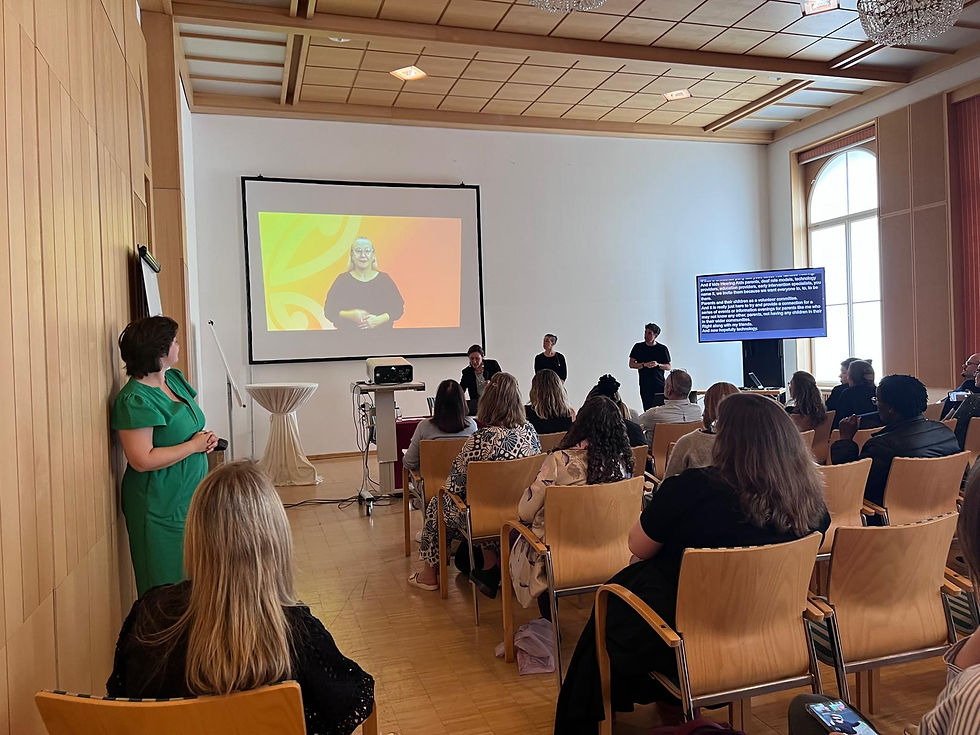
Together, their presentation reflected how services in Aotearoa are continuing to evolve to better support Deaf and hard of hearing children and their whānau, bringing lived experience, professional insight, and Deaf community perspectives into one shared story.
The session sparked thoughtful discussion, including questions about how widely sign language is used in New Zealand, how it is funded, and recognition of the strides The Hearing House has made around NZSL in a relatively short space of time. There was also strong acknowledgement of the value of parent-lived experience in shaping meaningful, inclusive early intervention.
Our role is to partner with others and ensure NZSL is visible, valued, and accessible so every child can access language and thrive.
We are incredibly proud to see this work shared on an international stage. Ngā mihi to Willa, Natasha, and Claire for representing Aotearoa.


Comments